Our pregnancy continues step by step and from this moment we enter the third trimester of pregnancyYou are in a very special stage, in which the baby already looks a lot like a newborn and your body continues to adapt with intense physical and emotional changes.
In this quarter the discomfort due to the baby's weight gain They are becoming increasingly important, and we are going to start feeling the need more strongly to “prepare the nest” For our baby: organizing their room, washing their clothes, thinking about the birth and what the arrival home will be like.
What does my baby look like at 28 weeks pregnant?
At this point of pregnancy the baby enters the peak growth stageHe's going to start earning approximately about 200 grams per weekSo you'll notice your belly growing rapidly over the next few weeks.
The baby's size at the end of week 28 is usually similar to that of a large lettuceIts total length from head to toe can be around 35-38 centimeters, and its average weight is around 1.050-1.100 gramsValues between approximately 700 and 1.230 grams are still considered within normalitybecause each baby has their own growth rate.
It's starting to look much more like a newborn. You accumulate fat under your skin The baby's shape begins to round out, and the skin, which until recently was more wrinkled, becomes smoother. The baby's skin thickens, and the baby is enveloped in a whitish substance called... vernix caseosa, which protects it from direct contact with amniotic fluid and acts as a barrier against infections and chafing.
Their lungs already have a development that would allow, with certain care, that the baby to breathe and for gas exchange to take place in the case of premature birth. Even so, they usually need respiratory support, incubator, and very close monitoringbecause they are still finishing producing an essential substance called pulmonary surfactant, which prevents the alveoli from collapsing between breaths.
The central nervous system has a phase of great development in the 28th week of pregnancy. The brain no longer has a smooth surface, The first grooves and convolutions appear and the weight of the brain also increases. In addition, he is mature enough to lead the fetal breathing movements, better coordination of arm and leg movements and even basic body temperature control of the baby.
At this point the baby can already open and close your eyes and is able to distinguish the light of darknessIf you shine a bright light on your belly, you might notice it moving or turning slightly, reacting to that stimulus. eyelashes begin to grow and the facial features become increasingly defined.
Your baby has quite developed senses and distinguishes the voice of his motherIn addition to the usual sounds of the environment, take the opportunity to talk to him, sing to him, and play soft music. It's important that he already you have decided his name and call him by that name. If he has older siblings, make them participate and ask for their opinion Discussing possible names will help them feel involved and strengthen the bond with the new family member.

In this stage Now it moves a lot And you notice those movements perfectly: little kicks, turns, pushes with elbows and knees… You might even observe activity patterns, such as times of day when he is most active (usually when you are resting or after eating).
You'll probably notice it from time to time. who has hiccupsIt feels like small, rhythmic jumps in your abdomen. These episodes are normal and related to... diaphragm maturation and fetal breathing and they don't cause any discomfort to the baby.
By week 28, the baby's position in the uterus can vary considerably. It may be facing the head down, ideal position for childbirth, or with the buttocks or feet pointing downwards (buttocks position). It still has several weeks to turn aroundSo, it's not a cause for concern that it's not engaged yet. During medical checkups or a follow-up ultrasound, they'll be able to tell you how it's positioned.
Changes in the mother during week 28
Now is a time of important growth for both the baby and the uterus, so The skin of the abdomen needs to stretch very quickly.Keep it well hydrated daily; you can use a good anti-stretch mark cream specifically for pregnancy or suitable body oils. This is when you'll need it most. You might even notice, itching in the stomach or breasts, which is caused by such a sudden stretch.
If you notice the itching throughout the body or if you notice on the palms of the hands or on the soles of the feet You should always consult your doctor, as it could indicate a problem that requires medical evaluation, such as liver problems common during pregnancy.
The uterus continues to grow and its height usually ranges around 23-27 centimeters from the pubic area. This causes the digestive system is slightly compressedFor this reason, it's common to feel fuller with a small amount of food, and it's recommended eat small amounts several times a dayChoose foods that are easy to digest and avoid heavy or very fatty dinners.
At this time it is very common to have constipation and even hemorrhoidsTo prevent it, try increase fiber intake through fruits, vegetables, legumes and whole grains and uses raw olive oil During meals. Maintaining good hydration and doing some gentle exercise also promotes intestinal transit.
Even if you have slept well throughout your pregnancy, from this moment on it is normal for you to start having some trouble restingHormones, abdominal size, back pain, or frequent urination can disrupt sleep.
Try not to make large or heavy dinners, relaxation or breathing exercises before going to bed and go to bed as soon as you start to feel sleepy. Use a pregnancy pillow Placing cushions between your legs and behind your back can help you find a more comfortable position, preferably lying on her left side to promote venous return and blood supply to the placenta.
Noticing your baby move is reassuring and can be a very pleasant and satisfying feeling, but sometimes, the movements are so abrupt which you may find annoying. Also, the baby you already know what you like and what you don'tIf he doesn't like the position that's comfortable for you, he won't stop moving until he gets you to. change it for another that is most comfortable for her.
During this trimester, discomforts such as the following may also appear or intensify: back pain, sciatica, leg cramps, swelling of feet and ankles, varicose veins and a feeling of tired legsMaintaining gentle physical activity such as daily walking, swimming, or pregnancy-adapted exercise (e.g., yoga or Pilates for pregnant women) can relieve many of these symptoms.
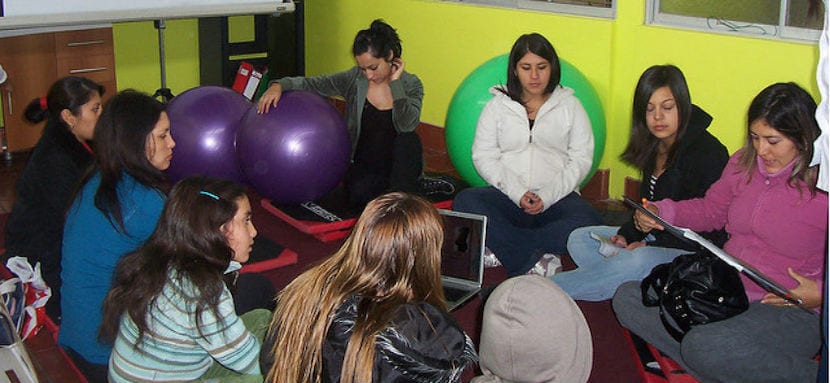
Now is a good time to start childbirth classesYou're still relatively agile and can exercise without major problems. Plus, you'll finish the course several weeks before giving birth, so if you need to repeat any of the classes or practice sessions, you'll have time. These classes typically include Information on labor, pain relief methods, breastfeeding, newborn care, and pelvic floor exercises, among other content.
If you present urine leakage when coughing, laughing, or making minor exertionsIt's a good time to start do Kegel exercisesThese exercises strengthen the pelvic floor muscles, improve urinary incontinence, and help speed up postpartum recovery.
Lower back pain and discomfort in the third trimester
The anatomical changes of the spine during pregnancy begin to become noticeable from the second and third trimesters. From this point on, pregnant women have a characteristic way of walkingwhich tries to balance the changes the body undergoes: the steps are somewhat shorter and many women lean slightly backwards to compensate for the weight of the abdomen.
The abdominal muscles contract to support the increased weight of the uterus and the ligaments relax due to the effect of hormones that are released during gestation. This compensation by the spine to maintain the correct axis of gravity can produce compression of the nerve roots and cause discomfort in the lower back.
Around the 70% of pregnant women They suffer from this condition to varying degrees, and it is one of the most frequent complications. Several factors can intensify these discomforts, such as:
- Over weightThe compensation that the spine makes is even more forced.
- Inadequate footwearVery flat shoes or shoes with excessively high heels do not help maintain the spine's balance. Shoes with low heels and good support are ideal.
- weight loadIt's best to avoid overloading yourself; use a shopping cart and, if you have small children, try not to carry them in your arms for too long.
- Sustained postures: Staying seated or standing for many hours without changing position overloads the lumbar region.
You'll start to notice that it's no longer comfortable to sleep in certain positions. Use pillows and cushions To help your body relax and avoid back strain, sleeping on your side with a pillow between your legs can help. release lumbar and pelvic overload.
As for physical exercise, even though you're getting heavier, it's important. strengthen and tone muscles which helps maintain balance. You can practice yoga or pilates for pregnant womenYou can consult a specialized physiotherapist who can guide you on specific exercises for your back, or perform swimmingIt's a very complete and gentle way to exercise. There are also studies that support this. acupuncture as an effective treatment in some cases of gestational lower back pain.
La postural hygiene It's essential: when you sit in a chair, avoid crossing your legs and maintain an upright posture. Your legs shouldn't dangle; try to keep the soles of your feet flat on the floor or on a small footrest. If you've suffered from lower back pain in previous pregnancies, it's a risk factor for experiencing it again in subsequent pregnancies.
If you suffer from this condition, unless medically contraindicated, prolonged rest is not recommended, but implement a physical rehabilitation program that strengthens the back and abdominal muscles and improves posture.
Tired, swollen legs and lymphatic drainage
The pressure exerted by the uterus on the blood vessels, especially on the vena cavaIt hinders the venous return of blood from the extremities, producing the fluid retention which causes the legs to swell. Generally, due to the effect of gravity, legs are less swollen in the morning than at night.
This fluid retention is also known as edema And, in addition to the legs, it can appear on ankles, hands, or even the face. To relieve it, you can follow a series of recommendations:
- elevate legs When you sit or lie down, rest them on a cushion or chair.
- Avoid very tight clothing that marks the skin, especially stockings, trousers or garments with elastic at the thighs and waist.
- Use comfortable shoes and not tight, allowing the foot to move and promoting circulation.
- Resort to lymphatic drainage treatments or massages performed by professionals trained in pregnancy, unless your doctor advises otherwise.
- Apply warm and cold water showers alternately on the legs to activate blood circulation.
- Perform Gentle exercise such as walking or swimming, which improves venous and lymphatic return.
- In hot weather, Avoid direct sunlight and extreme temperatures on the legs.
If you notice that your face, legs, and hands are excessively swollen when you get up If you experience swelling in the morning, or if it appears suddenly, it's advisable to visit a pharmacy for evaluation. blood pressure and consult your doctor if necessary, as it could be related to complications that require monitoring.
Medical tests and check-ups in week 28

We are in a very quiet period regarding testing. If the pregnancy is normal and low-risk, You probably won't have any special tests. At this time, beyond routine checks of weight, blood pressure, basic tests and symptom review.
However, many protocols review the evolution through urine analysis to detect the concentration of sugar and proteins such as albumin, which helps to rule out complications such as urinary tract infections or alterations in blood pressure.
La glucose test (Gestational diabetes screening) is usually performed between weeks 24 and 28. This test determines if there is a risk of developing gestational diabetesIf this analysis detects high levels of glucose in the blood, a more precise test is performed called glucose curve to confirm or rule out the diagnosis and plan the appropriate treatment.
Depending on your medical history or what was observed in the 20-week ultrasound, your healthcare professional may schedule some control ultrasound additional. It is only performed systematically if there is suspicion of some alterationIf the previous ultrasound showed any unusual parameters or if you have problems such as gestational diabetes, fetal growth restriction, placenta previa, or other complications.

The only routine exception regarding specific tests is in the if the mother's blood Rh is negativeIn that case, by week 28 you should administer anti-D gamma globulin to motherTo prevent a reaction in the mother's blood, if the baby is Rh positive, and the production of antibodies against the Rh factor, which would very dangerous in the face of other pregnancies.
This vaccine should also be administered after delivery whenever the The newborn is Rh positive and the mother is Rh negative.In addition, Rh-negative mothers should receive this vaccine after undergoing invasive tests such as chorionic villus sampling, amniocentesis, funiculocentesis or fetoscopy, as well as after a curettage for abortion, to reduce the risk of isoimmunization.
At this stage, it is also recommended to pertussis vaccineIt is a vaccine of relatively recent implantation in pregnancyDepending on the autonomous community or country, it is administered at one week or another of gestation, but never before week 28Consult your midwife or gynecologist about where and when to request it. this link You can find more information about it.
At your next prenatal appointment, your doctor or midwife will also be able to discuss this with you. the baby's current position (whether it's upside down or buttocks down), resolve doubts about Physical activity, work, travel, warning signs and help you plan the following weeks of your pregnancy.
Week 28 marks the beginning of the final stretch of pregnancy. Listening to your body, taking care of your diet, staying gently active, and attending your recommended medical appointments will help you reach delivery in the best possible condition, enjoying your baby's movements and preparing for their arrival.